Thursday, March 15, 2018

Nina Simone – The High Priestess of Soul

Related image

Nina Simone, born as Eunice Kathleen Waymon was an American singer, songwriter, pianist, arranger, and activist in the Civil Rights Movement who employed a broad range of musical styles –including classical, jazz, blues, folk, R&B, gospel, and pop.

From a young age, Simone was musically talented. She began playing piano at the age of three and after demonstrating a real talent with the instrument, she began performing at her local church.  Able to play virtually anything by ear, she was soon studying classical music.  It was from these humble roots that Eunice developed a lifelong love of Johann Sebastian Bach, Chopin, Brahms, Beethoven, and Schubert. After being denied admission to Curtis Institute of Music in Philadelphia, she took a job as a photographer’s assistant, an accompanist, and began teaching music to local Philadelphia students to earn cash.

Waymon performed at the Midtown Bar & Grill on the Pacific Avenue in Atlantic City to fund her private music lessons. Despite being the sixth child of a preacher, Waymon enjoyed singing secular music and changed her name to Nina Simone to disguise herself from family members, after deciding to play "the devil's music" or "cocktail piano" at the nightclub. Word spread about this new singer and pianist who was transforming popular tunes of the day into a unique synthesis of jazz, blues, and classical music; she gained a small but loyal fanbase.

At the age of twenty-four, Nina came to the attention of the record industry. After submitting a demo of songs, she had recorded during a performance, she was signed to Bethlehem Records. Nina delved into the repertoire of her setlist from the club performances prior to choose the songs doe her debut set with Bethlehem Records.

Her stay with Bethlehem Records was short, and after moving to New York City, she signed with Colpix Records. As Nina’s reputation as an engaging live performer grew, it wasn’t long before she was asked to perform at the prestigious Newport Jazz Festival. Her stay with Colpix resulted in some wonderful albums – nine in all, all which contained tracks that highlighted Simone’s element of storytelling within her music. Nina’s Colpix recordings cemented her appeal to a nightclub-based U.S. audience. Once she moved on to Phillips [Records], Simone was ready to expand her following globally and to comment on her sensitive opinions of the Civil Rights Movement.

“Her first LP for the label, 1964’s In Concert, signaled Nina’s undaunting stand for freedom and justice for all, stamping her irrevocably as a pioneer and inspirational leader in the U.S. Civil Rights Movement. Her own original “Mississippi Goddam” was banned throughout the South but such a response made no difference in Nina’s unyielding commitment to liberty; subsequent groundbreaking recordings for Philips like “Four Women” (recorded September 1965) and “Strange Fruit” continued to keep Nina in the forefront of the few performers willing to use music as a vehicle for social commentary and change. Such risks were seldom taken by artists during that time of such dramatic civil upheaval.” 

This was not the first time that Simone stood up for her civil rights. When Simone was 12 years old, she refused to perform at her recital until her parents could move back to their original seats (near the front) that they were forced to move out of. And her admission denial to the Curtis Institute of Music in Philadelphia represented another slap in the face for social injustices. But it took the killing of Medgar Evers and the four girls in Birmingham to act as catalysts for a transformation of Nina’s activist career. From then on, a civil rights message was standard in Simone's recording repertoire, becoming a part of her live performances.

Simone's consciousness on the racial and social discourse was prompted by her friendship with black playwright Lorraine Hansberry. Nina Simone's social commentary was not limited to the Civil Rights Movement; "Four Women" exposed the Eurocentric beauty standards imposed on black women in America, as it explored the internalized dilemma of beauty that is experienced between four black women with skin-tones ranging from light to dark. Nina Simone explains in her autobiography "I Put a Spell on You," the purpose of the song was to inspire black women to define beauty and identity for themselves without the influence of societal impositions. 

Her first hit song in America, her rendition of George Gershwin's "I Loves You, Porgy," peaked at number 18 on the Billboard Hot 100. "My Baby Just Cares for Me" became her biggest success years after its original recording after it was featured in a 1986 Chanel No. 5 perfume commercial. She also had two songs that were featured in the Broadway Musical “Hair.”

Too many artists to name have been influenced by the legacy of Nina Simone, and many of her songs have been used in countless movies. Her impact on musical history is prominent and sometimes overlooked by the sheer excellence and unique modifications to her sound, but Ms. Nina Simone was one of the greatest jazz musicians to ever do it.

Sunday, March 11, 2018

Sheila E. – The Queen of Percussion

Related image
March is Women’s History Month and, currently, it’s more important than ever to make sure we recognize women and their contributions to the world. I couldn’t think of a musician more deserving to have recognition than Sheila E. She was one of the first women that I looked to and applauded the fact that she could be better than any male counterpart. The Queen of Percussion was the best drummer and left other male drummers in her dust.

The strong and ambitious Sheila Escovedo had no choice than to have a musical talent as she was born into a musical family. Her percussionist father Pete Escovedo; musical uncles Coke Escovedo, Alejandro Escovedo, Mario Escovedo, and Javier Escovedo; and godfather Tito Puente all influenced and inspired her musical journey and she spent a great deal of time performing with them; she still performs with her father. By her early 20s, she had already played with George Duke, Lionel Richie, Marvin Gaye, Herbie Hancock, and Diana Ross. She met Prince in 1978 while performing with her father but didn’t join forces with him until the Purple Rain recording sessions, where she provided vocals to “Let’s Go Crazy” and “Erotic City.”

In June 1984, she released her debut album The Glamorous Life. The album's title-track single "The Glamorous Life" peaked at number 7 the Hot 100 and topped the dance charts for two weeks in August 1984. The video for the song would bring three MTV Award nominations for Best Female Video, Best New Artist, and Best Choreography. She also received two Grammy Award nominations for Best New Artist and Best Pop Vocal Performance Female.


Sheila toured as the opening act for Prince’s Purple Rain tour in 1984. Her second studio album Romance 1600’s second single, and one of my favorite songs, "Love Bizarre" became her signature song and peaked at number 11 on the Hot 100 and topped the dance charts. Sheila later served as Prince's drummer and musical director in his band during the tours from 1987 to 1989.

Even the legendary Ringo Starr observed Sheila’s excellence on the drums. She performed three stints as one of the member “All-Starrs" of Ringo Starr & His All-Starr Band, in 2001, 2003, and 2006. Her drum "duets" with Starr are a moment of comic relief in the show, where they play the same parts, but he quickly falls behind, shrugs and smiles as she takes off on an extended percussion solo.

Her romance and pure friendship with Prince led to her adamant refusal of any replication of the late musician in any physical form, such as holograms, and during the 2016 BET Awards, Sheila and the New Power Generation led a tribute to Prince featuring a medley of his hits – the best tribute to him to date.


Sheila is not only an amazing musician, she is also committed to helping others through music. Through her initiative, Elevate Hope Foundation, Sheila provides abused and abandoned children an alternative method of therapy through music and the arts, as well as funding special services and programs that assist the needs of these children using these fundamental methods. She understands the power of providing music and the arts as life-changing tools desperately needed to help children accomplish their goals, enrich their lives and strive for greatness. “We’re going to go around the country and elevate any city that will allow us to come there and, really, just mentor the kids, helping them with music and arts, helping them fulfill their dreams and really express themselves,” she explains.

Sheila E. pours her heart and soul into every song. Sheila is passionate about two things above most: music and helping others in need. Throughout her career, she’s been fortunate enough to get to share her story and use the power of music to help those who need it most. Sheila is an inspirationalist, using her talents and resources to help those who need the healing power of music. And if that is not the mark of a woman who deserves recognition, I don’t know what would be.

Wednesday, February 14, 2018

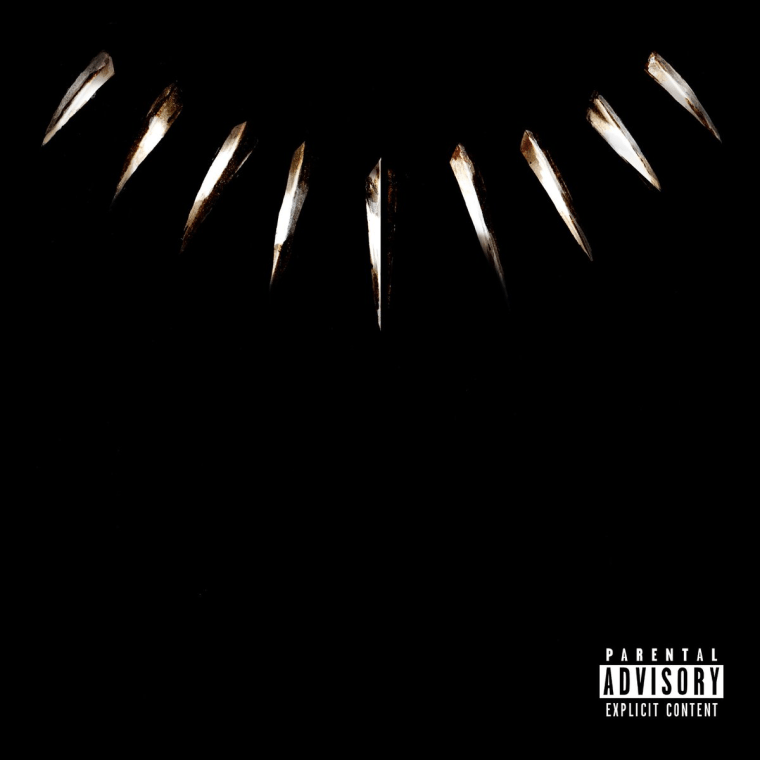
Black Panther The Album Review


When choosing a person to create the soundtrack to the movie The Black Panther, Ryan Coogler had to be very picky. It is one of the most anticipated movies of the year, and after Kendrick Lamar alluded to his involvement with the album in his video for “Love,” everyone awaited some official announcement. Kendrick and Anthony “Top Dawg” Tiffith were chosen to curate and produce the album alongside producer Sounwave.

Image result for black panther soundtrackCoogler selected Lamar because of the themes in his music—foremost on that list: blackness as an identity, spirituality, power dynamics, self-doubt, and the onus of kingship—align with those in the film. Some of the music is from the movie, some music is merely inspired by it. Black Panther The Album is finely-tuned, aware of its audience, its objectives, and the stakes. 

This carefully curated album can stand as a piece of work on its own while working alongside the blockbuster movie, and it has a lot to do with Kendrick Lamar. Kendrick has five official features on the album, but he appears somewhere on every track. He puts his touch on every song, whether it involves only a hook or a whole verse, while the other artists bring their individual swag to each track.

The opening title track, “Black Panther,” finds Kendrick at his most explosive. The beat erupts beneath him as he draws parallels between his own internal conflict and T’Challa’s, weighing the burdens that come with being a leader of people.

Image result for all the stars kendrick lamar video shots“All The Stars,” upon hearing it as the first single from the soundtrack, provided a song of uplift and hope. But in relation to the entire piece of work, the song is underwhelming, honing a type of popular sound that stands as a strong single-song but not a strong song. The same rings true for the album’s finale “Pray For Me.” But Kendrick has never been the type of artist who focuses on making songs specifically radio-ready. Maybe we’ve found his Achilles’ heel.

The veteran rappers that Kendrick enlists do their job as expected, especially in songs like “X” where ScHoolboy Q and 2 Chainz’s flows compete playfully and cockily. Ab-Soul delivers some of his best raps in years on “Bloody Waters,” uncorking his signature wordplay. Jay Rock and Future slide and ride the upbeat “King’s Dead,” giving all the vibes of a super badass villain who’s side you really want to be on.

Related image
Yugen Blakrok
The Black Panther saga has strong feminist overtones – T'Challa is aided and goaded by a corps of female warriors called the Dora Milaje – and some of the strongest songs on the soundtrack shine the spotlight on women. Jorja Smith is a raspy songbird who croons out the ballad “I Am;” she is now certified famous, especially after her contributions here and to Drake’s More Life. There’s also a small violin break in this song that gives me real-life goosebumps. On “Opps” Vince Staples keeps up with and challenges Kendrick’s deadly flows, but it is Yugen Blakrok, a female MC from Johannesburg, who steals and out-lyricizes both men on the track. The sampling of this track along with the production is an earnest adaptation of the hip-hop sound with African influences. 

Image result for sob x rbe
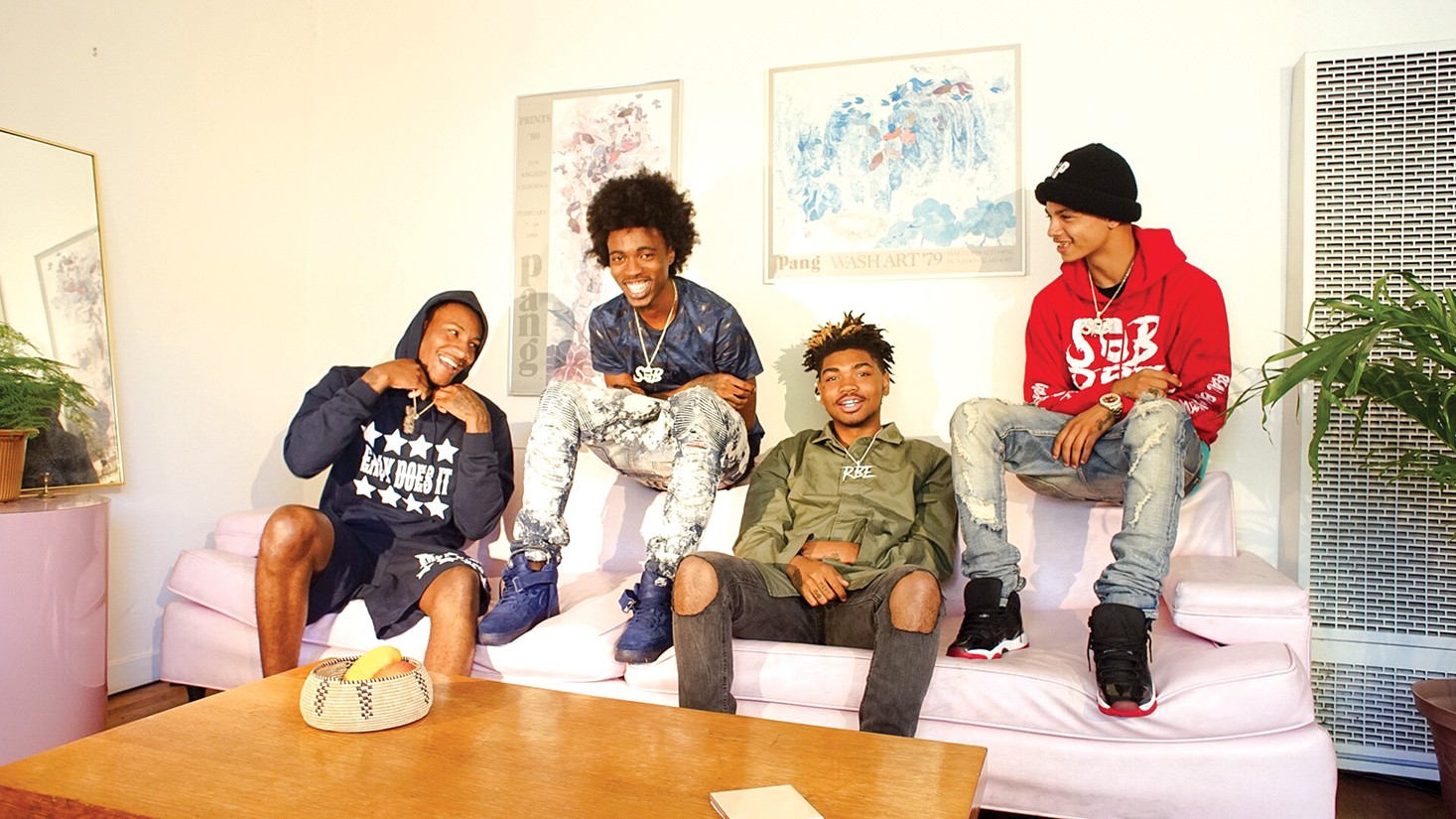
SOB x RBE
Kendrick’s collaboration with SOB x RBE presented their foursome to the world. “Paramedic!” brings the best aspects of West Coast rap to the forefront and shows its rough yet fun style. The ability to bring a style of rap and mix it with its originating African roots is impressive, and a task that Kendrick proved he could do. Speaking of African roots, in “Redemption,” Babes Wodumo is featured over a South African club beat called “gqom” – it’s the most upbeat song of the album and shows real authenticity.

“Seasons” is a mournful yet festive anthem that chronicles the struggles and inequalities of coming from Africa. It features California-rapper Reason (not to be confused with the South African raper that many excitedly hoped for) whose verse is reminiscent of a younger Kendrick with his story-telling style of rapping. But his verse, along with Mozzy and Sjava’s, helped to establish the common theme of the soundtrack. Within every song, whether it be chanted in the song’s hook or woven deeper in the verses, the album stands as a metaphor of the plights in the Black community that echo from the issues and sentiments from a past unknown, a past being represented with this movie.

And “Big Shots,” well, that’s just the proverbial taunting-celebratory-lap that Kendrick and Travis Scott take together. I mean, who other than Kendrick Lamar can use a refurbished hook and still make two hit songs from it? Another historical success on the books for Mr. Lamar. It’s got me amped and ready for the movie. And with some of the songs from the soundtrack being worked into the score of the film, we’ll get to see how some of the music translates directly into the movie.

Related image

Thursday, January 25, 2018

Mariah Carey: Queen of the Hip-Hop Collaboration

Named the United States’ most successful artists of the 1990’s by Billboard and the world’s best recording artist by the World Music Awards, Mariah “Mimi” Carey obtained fame early in her career that no one could’ve imagined. Her uncharted success came from her choice to break the mold while taking a risk on an up and coming genre of music; this decision helped shape music history.

Feeling restricted in her personal life and with her music, in late 90s Carey changed her image. Instead of sticking exclusively to the pop charts, Carey chose to venture into the world of hip-hop. She pulled together a new creative team and revamped herself into a sexier, more mature Mariah Carey. With the help of some of the 90’s biggest producers and hip-hop artists, Carey changed her style and her sound flawlessly.

Since making her transition in 1996 Carey has over 60 hip-hop collaborations under her belt; impressive for someone who started out exclusively as a pop artist. Her transition also helped solidify hip-hop/rap as a genre that could not only stand on its own merit but as a music that blended flawlessly with other genres. Hip-hop’s soaring popularity in the late 90s owes some credit to Mimi.

With two songs, Carey found the formula for a solid collaboration and solidified her position as the queen of the hip-hop collaboration.


HONEY

“Honey” was the first single from Carey’s sixth studio album Butterfly. It was also the re-defining song of Carey’s career. Honey was written and produced with the producer powerhouse of Puff Daddy, Q-Tip, and Stevie J. After the song was completed, Combs was very confident with the song, calling it "slammin'," but because of its heavy hip-hop influence, he felt only cautiously optimistic about the song's commercial success. Boy, he was wrong.

Music critics described her musical transition as “genuine” as they sang the praises of the song. "Honey" was successful in the United States, becoming Carey's third single to debut atop the U.S. Billboard Hot 100, a feat that has yet to be duplicated. The song stayed at number one for three weeks.

“Honey” is one of Carey’s most remixed song. The most notable was the “Bad Boy remix” and the “Classic mix.” The Bad Boy remix feature rapping verses from The Lox and Ma$e. Both versions sampled “The Body Rock” by The Treacherous Three.


Jermaine Dupri and Da Brat tried their hands at the song and created the So So Def remix. It features rap verses from both. Dupri used a new sample from The Jackson 5’s “It’s Great to be Here.”


David Morales created several dance remixes to the song as well – The Class mix, Def Club mix, Rascal Dub, and Boss Anthem mix. It’s ironic that the song that shaped her persona was insanely popular and laid the groundwork for more to come.


FANTASY

Carey and Puff Daddy teamed up to create “Fantasy,” both the original version and the remix. Although Columbia Records allowed creative liberty with Carey’s music, they became hesitant when she chose to feature Ol’ Dirty Bastard on the remix. They feared the sudden change was completely left field for her music and worried it would jeopardize the album's success.

Carey has stated that the “Bad Boy remix” contributed to over half of the sales of "Fantasy".


There is also a version omitting Ol' Dirty Bastard's verses – the “Bad Boy Fantasy remix.” “The Bad Boy remix” garnered positive reviews from music critics. Ken Tucker from Entertainment Weekly praised the song, claiming it’s one of the few tracks where Carey "defines herself."

The song and its remix arguably remain one of Carey's most important singles to date. Due to the success and influence of the song, Carey is credited with introducing R&B and hip-hop collaboration into the mainstream pop culture, and for popularizing rap as a featuring act.


The formula is tried and true and has been used by many R&B, hip-hop, and pop stars alike. “It became standard for R&B/hip-hop stars like Missy Elliott and BeyoncĂ©, to combine melodies with rapped verses. And young white pop stars—including Britney Spears, 'N Sync, and Christina Aguilera—have spent much of the past ten years making pop music that is unmistakably R&B,” explained Sasha Frere-Jones – editor of The New Yorker. “Her idea of pairing a female songbird with the leading male MCs of hip-hop changed R&B and, eventually, all of pop.”

Sunday, January 7, 2018

Late Registration: When the Sequel Becomes the Prototype

Kanye West's Grand Vision Began with His 2005 Live Album

Maximalism is an aesthetic of excess and redundancy. The philosophy can be summarized as "more is more." Kanye West, in his recent years, has been given the title of a maximalist when it comes to his music. The beats and the production of his albums and other works have evolved drastically from the soulful beats of College Dropout and The Blueprint. The Young Musicians Foundation has even arranged and orchestrated a symphony based off merging the works of Beethoven with West’s Yeezus and The Life of Pablo. The juxtaposition is jarring. Two musicians in different times who both “… wrought havoc on existing musical forms, alienated many, and forever changed the course of musical history.”

Not many know that West dabbled with the “more is more” philosophy long before My Beautiful Dark Twisted Fantasy and Yeezus. It’s evident from his sophomore release, Late Registration.

After seeing Eternal Sunshine of the Spotless Mind, an American film directed by Michel Gondry, West was captivated by the lushly orchestrated score of the movie and sought after its composer. Jon Brion, the film's composer, didn’t have a hip-hop background but he agreed to work with West anyway. 

The recording sessions between West and Brion were exploratory, using a broad spectrum of sounds. West brought his soulful samples, drum beat programming, and unfinished rap verses to the sessions and would construct his songs from there. He worked alongside Brion to choose a variety of unique instruments and attempted to incorporate their distinctive sound into the song's texture; Brion played each of them for West.


The album is largely orchestral in nature with a harmonious combination of string arrangements, piano chords, brass flecks, and horn riffs among other symphonic instrumentation. A myriad of foreign and vintage instruments were also used, such as a celesta, harpsichord, Chamberlin, CS-80 analog synthesizer, Chinese bells and berimbau, vibraphones, and marimba.

The production carried West in an unforeseen new direction, a raised tempo and a driving, pulsating bassline colliding with tasteful live baroque instrumentation to present an extravagant vision of the Kanye sound. On songs like “Celebration,” Brion conducted a 20-piece orchestra. “Bring Me Down” holds more orchestration than any other than any other track on the album.

But Brion makes his mark on tracks like "Gone.” It contains some of the most elaborate orchestral arrangement of the entire album. The composition begins with a vocal sample of "It's Too Late" by Otis Redding and a two-chord piano ostinato, followed by a simplistic funk beat. As the song progresses, its structure gradually morphs and develops more and more musicality.

The composition assumes ten violins, four violas, and four cellos amid the verses. all of which initially come in brief staccato bursts that simply punctuate the rhythm but eventually expand and consolidate into a fully formed string section by the arrival of the harmonic choruses.

Image result for late registrationLate Registration is the foundation for latter-day maximalist Kanye works like Cruel Summer and My Beautiful Dark Twisted Fantasy in its kitchen sink sonics but also its tone. The album dives fearlessly into the dark of the black American experience.

On Yeezus, West screams of the monopoly of wealth that the rich and powerful have and how they use it to ensure the powerlessness of others, making the poor and the weak like the new slaves. It wasn’t received as easily as when he spoke of communities beset by crime-gripping restless youth with a lack of opportunities on “Heard Em Say”. Or when he told the story of his family coming together to his grandma’s hospital bedside due to income-based lack of access to proper medical care in “Roses”.

“Crack Music” is Late Registration’s purest collision of Kanye’s black radical consciousness and Jon Brion’s orchestral flair. Kanye rhythmically walks through the collapse of the civil rights movement, the rise of the crack epidemic, and hip-hop’s role as a coping mechanism and gainful employment amid it all.

Rob Sheffield of Rolling Stone deemed the record "an undeniable triumph, packed front to back, so expansive it makes the debut sound like a rough draft”; that’s exactly how it Late Registration stands against the rest of Kanye West’s works – if not the very best, it remains the prototype.

Saturday, December 30, 2017

The Year of the Rap Collaboration Album


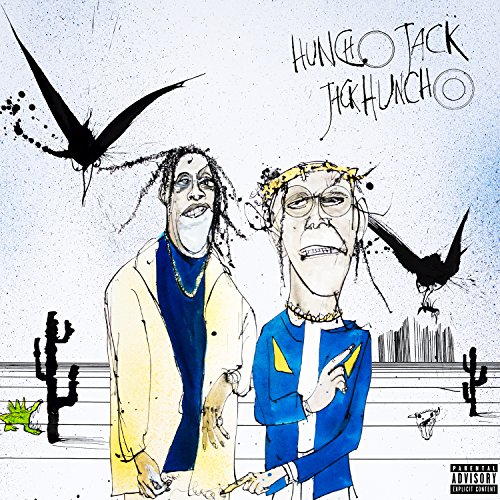
Future and Young Thug’s Super Slimey made its debut in October at no. 2 on the Billboard 200. On November, 21 Savage, Offset, and Metro Boomin released Without Warning and debuted at no. 4 on the album charts. And Quavo and Travis Scott’s collaboration, Huncho Jack, Jack Huncho, is set to debut at no. 2 on the Billboard 200 to bring in the new year.

This sudden upsurge in joint albums is intriguing, and on its surface, has no obvious creative explanation. The only viable explanation is that, rap is poppin and rappers intend on riding this wave towards all its success.

In the late 90’s, rap had become a more household genre of music and its financial opportunity was evident. Representations of rap’s acceptance shone through pop culture and the rap world became more acutely aware of the genre’s money-making potential – think Will Smith with The Fresh Prince of Bel-Air and LL COOLJ with In the House. Like I said, rap was poppin; and what’s better than one rapper? Two.

Started with a Remix, Now We Here

The early-to-mid 2000’s was the Age of the Remix. Any massively popular song would automatically inherit a remix. This happened more often with R&B songs that earned a revised hip-hop beat and verse from a rapper – such as Mariah Carey’s Honey (remix) and Fantasy (remix), and Brandy’s I Wanna Be Down (remix). In rap, it was standard for any hit song to merit a remix filled with as many other big-name artists as possible. DJ Khaled’s I’m So Hood (remix) is a well-known example – which featured Young Jeezy, Ludacris, Busta Rhymes, Big Boi, Lil Wayne, Fat Joe, Birdman, and Rick Ross.


Engineered for the same purpose as 2017’s collaborative albums, these songs served as a royalty check. These new songs also drew attention back to the original versions, thus making more money. It’s an easy way to make money, you must admit. And it’s even easier and more efficient now than it would’ve been in the past.

The music production software and file-sharing technology has enabled rapper to complete projects without ever meeting face-to-face. This, alongside marketing and distribution shortcuts in the form of streaming services and social media platforms, has worked to make the collaboration process much easier. And if it’s that easy to make ONE song, imagine how much time can be saved when creating a whole album.

Rap is King

Regardless of the ease of recording or the number of artists squeezed onto a remix, the most important aspect when it comes to these rap collaborations is that RAP IS KING.

“The Rapper has ascended from pop culture figure of interest to the center of the pop culture universe. Where the “rapper” was once a faceless do-rag and baggy-T-shirt-clad monolith in the eyes of the public, they are now some of the world’s biggest stars with fully formed, idiosyncratic, and recognizable brands.”

To be able to have two or more talented rappers and producers working together to create a project for consumption is exciting. To those who are fans of either contributing artist, it serves as another release from their favorite rapper. It also keeps us wanting more. The collaborative album serves as a premium product that we can’t receive all the time, while it reminds us of what is to come.

Huncho Jack, Jack Huncho was released on December 21, 2017.
Image result for huncho jackTravis Scott’s AstroWorld is set for release sometime soon, we hope.
The Migos’ Culture II is set for release in early 2018.


See? They just keep us wanting more.

Go DJ: The Producer's Glory

These days, songs are being considered more than the lyrics and vocals. Producers are finally gaining recognition for their role in the creation of a successful song, and it’s about time! I can admit to being uninformed when it came to music producers. As a matter of fact, it wasn’t until I started listening to the drops on rap singles and matching them up to their producer’s identity that I began to understand true ownership of songs.
Music listeners are beginning to take notice and turning into fans. And major artists are beginning to take notice as well. Many notable rappers have been very forthcoming with producers that they turn to when they are looking for a BANGER. More often now than ever, rappers are even teaming up to create full projects with their favorite producers. Being a producer has always been a lucrative job – especially before many rappers began to take control over producing their own music – but now that their names can sit right beside the artist’s name, things finally seem fair.
In the humble beginnings of DJ Khaled and DJ Mustard, the notion of a DJ creating a song seemed much easier. They enlisted artists that they wanted to feature on the beat that they created, and arranged them in whichever way they chose. In that way, it was always more of the DJ’s song than the artists themselves – which is why DJ Khaled and DJ Mustard are listed as the ‘Album Artist’ of the songs on their albums. With the star power of some of the most successful singers and rappers at their disposal, creating hit songs has become a lucrative career for the likes of Mike WiLL Made-It, DJ Esco, and Travis Scott.
In nearly 10 short years, the responsibilities of the producer have not changed, but the attention that they received has. There aren’t many examples in rap’s past where one producer contributed all the music on a project. And in those few times, it was not listed as a project featuring the producer as a contributing artist.
Mannie Fresh was the infamous DJ that Lil Wayne proudly and loudly claimed in “Go DJ,” and he was the producer to Wayne’s entire Tha Carter project. Timbaland worked side-by-side with Missy Elliot to create her debut album, Supa Dupa Fly. And although it was well-known knowledge that Timbaland was always Elliot’s production partner, he was listed in the credits but not on the sleeve cover. And whether we chose to acknowledge it or not, Eminem would not let anyone forget that Dr. Dre was his mentor and that he executive produced The Slim Shady LP and The Marshall Mathers LP. The praise, in the end, went primarily to the Detroit-raised rapper who earned his own record label and status of a high-profile celebrity from it.
In the present day, artists who can produce their own music, like Pharrell Williams and Travis Scott, are the “chosen ones” of the rap game. But producers are all the rage! And when they choose an artist’s music to host or to produce a project in its entirety, the anticipation is usually uncontainable.
DJ Drama was a significant player in this style of mixtape. Although he made mixtapes that served as collaborations with multiple artists, his Gangsta Grillz mixtape collection has plenty of projects with a solo artist. Some of his most famous being: Lil Wayne’s Dedication 2, Young Jeezy’s Trap or Die, and Meek Mill’s DreamChasers.
DJ Drama boasts building the mixtape blueprint, and he’s correct. Not only did DJ Drama spread different sounds from region to region (the underground rap cyphers of New York were being heard in the Dirty South), but he also provided an outlet for new and upcoming rappers to shine. Over time, the Gangsta Grillz mixtape series became one of the most trusted brand names in hip-hop.

“Weezy and Dram’ – we are the Mixtape Blueprint

Hahaha! You welcome.

A Dedication!” – DJ Drama

DJ Drama also accomplished making money off a mixtape. At his peak, DJ Drama’s mixtapes had album artwork and jewel CD case, it had a barcode, and a place next to albums produced through record labels. This, along with using non-copyrighted music, is what got the DJ into some trouble. Some of the sampled songs on many of the projects were not authorized for use nor were they paid for. For DJ Drama to make money from any of those sale was considered piracy and copyright infringement, and what lead DJ Drama to evolve along with the times. "The streaming and various platforms have kind of made the mixtape DJ somewhat irrelevant, to be honest. Things are changing," he explains his choice to host his mixtapes online.

What’s interesting is the formula that Lil Wayne and DJ Drama came up with in 2005 is what is happening more and more these days in rap. DJ Drama boasts ever-so-humbly in the intro song off the highly-anticipated Dedication 6

"Y'all done copied the rhymes
Y'all done stole the artwork
Tried to emulate my shit-talkin'

Weezy and Dram' - we are the Mixtape Blueprint
Hahaha! You welcome
A Dedication!

When you hold titles such as one of the biggest mixtape DJs EVER, with one of the biggest mixtape series EVER (Gangsta Grillz), and Billboard requests that you do an oral history on The Mixtape, you have the right to be cocky.

“I make a beat, he raps to it… And we’d do it all over again.”
-Zaytoven

Image result for future beast modeAfter the arrest of DJ Esco in Dubai, Future was left with nothing. DJ Esco had a hard drive with him that contained all the music that he and Future has been working on for the past few years; it was then in police custody. Future turned his sights to the next producer who he trusted with the creation ofhis mixtape. Zaytoven, the trap maestro, was his guy. "Really, the work was done in two to three days. The rest was justy picking which record we wanted to use," Zaytoven explains. "For somebody else to come in and see us doing the work, it would blow your mind... We might've gotten 40 songs done as we were putting this tape together. That's us doing songs back-to-back. I make a beat, he raps to it... And we'd do it all over again. We might do 10 songs a day." 
Beast Mode was the first release after his public breakup with Ciara. It gave Future a chance to shake his image as rap Romeo, and further his retreat into the flashy bachelor lifestyle. With the help of Zaytoven's dark intricate piano melodies and shaking basslines, Future can delve into himself and produce songs that reveal some struggle that he endured. The chemistry between the two succeed in creating a mixtape that forces growth from both parties. And while Zaytoven is still known as Gucci Mane's producer, and he has created countless hit songs for many Southern rappers, Beast Mode is a testament of trusting your DJ to get the job done.

“If Young Metro don’t trust you, I’m gon shoot ya…”

There is not a harder working producer in the game right than Metro Boomin. In 2016 and 2017, he was responsible for such hits as:
  • The Migos - Bad and Boujee featuring Lil Uzi Vert
  • Future - Mask Off, Low Life featuring The Weeknd, Wicked
  • Kanye West - Father Stretch My Hands Pt. 1
  • Lil Uzi Vert - You Was Right
  • 21 Savage - X featuring Future, Bank Account
  • Kodak Black - Tunnel Vision
  • Post Malone - Congratulations
… to name a few, and that’s ONLY a few. With hits like these under his belt, it’s no wonder artists would kill those who Metro Boomin claims to distrust. All jokes aside, Metro Boomin seems to have the Midas Touch, or whatever the equivalent to the “Platinum Touch” would be in this music game.
Metro has teamed up to produce projects for 21 Savage (Savage Mode), 21 Savage and Offset’s collaboration (Without Warning), Big Sean (Double or Nothing), Gucci Mane (Droptopwop), Nav (Perfect Timing), and most of Future’s DS2. His discography speaks for itself.

"One of the most original, vivid, important voices in rap right now belongs to a guy who doesn't rap, whose voice never appears on records. It belongs to a guy who speaks entirely through his music. And right now, he's saying a whole lot."
This group of creators, plus many before and after, are a testament to the power of music. They are tilting the world of the music industry upside down, but in a good way. In a healthy way, that gives praise and recognition to all who are deserving.