Saturday, March 24, 2018

Chaka Khan – Queen of Funk

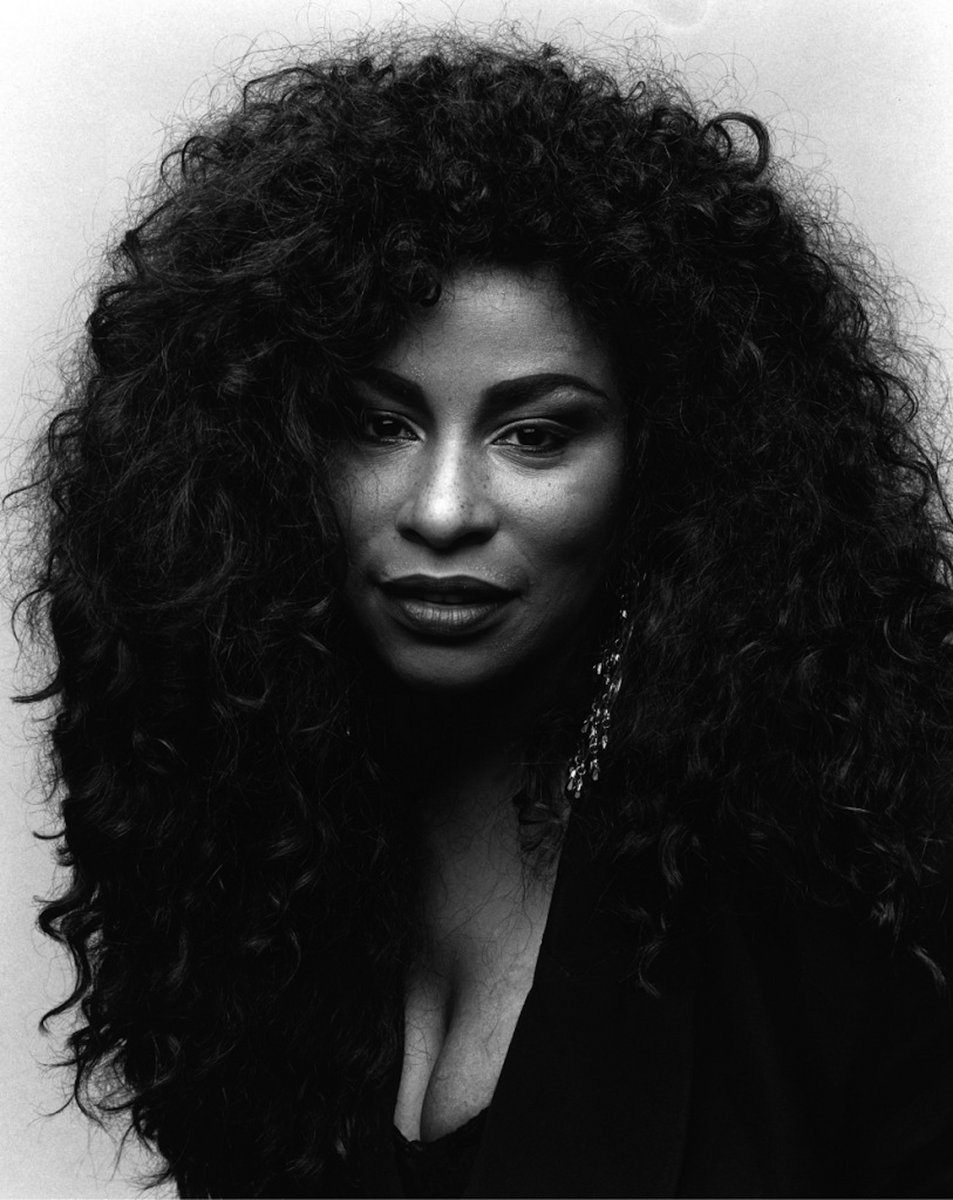
Image result for chaka khanBorn Yvette Marie Stevens on March 23, 1953, Chaka Khan was born into an artistic and bohemian household in Chicago's rough South Side housing projects. Khan has described her father as a beatnik and her mother as "able to do anything." She attributed her love of music to her grandmother, who introduced her to jazz as a child. Khan became a fan of rhythm and blues music as a preteen and at eleven formed a girl group, the Crystalettes.

Although she joined the Black Panther Party in the 1960s, her true love was in her music. She left the party and dropped out of school in 1969 and began to perform around Chicago, first with a group called Lyfe and then on her own. It was while performing alone that she met the group Rufus and ended up replacing their singer Paulette McWilliams.

Rufus’s breakout hit was “Tell Me Something Good,” produced by Stevie Wonder. It peaked at number 3 on the Billboard Hot 100 and won the group it’s first Grammy. The single's success and the subsequent follow-up, "You Got the Love", which peaked at number eleven on the Billboard Hot 100, helped their second parent album, Rags to Rufus, go platinum. From 1974 to 1979, Rufus released six platinum-selling albums.

In 1978 Khan released her debut album, Chaka. It featured her disco-crossover hit, “I’m Every Woman.” The success of the single helped the album go platinum. After her first solo success, she spent a lot of time collaborating with multiple artists on multiple projects, even teaming back up with Rufus for a few albums. It was from this final stint with Rufus that we received the hit “Ain’t Nobody.” The band separated for good afterward.


In 1984, Khan released her sixth studio album, I Feel for You. The title track, the first single released, was originally written and recorded by Prince in 1979.  Khan's version featured a harmonica solo by Stevie Wonder and an intro rap by Grandmaster Melle Mel. It became a million-selling smash in the U.S. and United Kingdom and helped to relaunch Khan's career. "I Feel for You" topped not only the U.S. R&B and dance charts, but achieved great success on the U.S. pop chart and reached No. 1 in the U.K. Other singles which helped I Feel For You go platinum included "This is My Night" and the ballad "Through the Fire."


The Chaka Khan Foundation educates, inspires and empowers children in our community to achieve their full potential by giving children who are at risk, either through poverty or through health issues like autism, the ability to achieve their dreams and give back to the community.

Khan was the first R&B artist to have a crossover hit featuring a rapper, with "I Feel for You" in 1984. Khan has won ten Grammys and has sold an estimated 70 million records worldwide. On May 19, 2011, Khan was presented with a Hollywood Walk of Fame star plaque on a section of Hollywood Boulevard in Los Angeles. Chaka Khan created her separate success away from Rufus and influenced many of today’s artists such as Mary J. Blige and Erykah Badu to Kanye West. To this day, Chaka Khan remains one of the most prominent figures in funk.

Friday, March 23, 2018

Dolly Parton – The Queen of Country

Image result for dolly partonDolly Rebecca Parton was born January 19, 1946, as the fourth of twelve children born to Avie Lee Caroline and Robert Lee Parton Sr. She has described her family as being "dirt poor." They lived in a rustic, one-room cabin in Locust Ridge, just north of the Greenbrier Valley of the Great Smoky Mountains. Music played an important role in her early life. She was brought up in the Church of God and began her earliest performances there when she was six years old. She received her first real guitar when she was eight years old. At 13, she was recording on a small Louisiana label, Goldband Records, and appeared at the Grand Ole Opry, where she first met Johnny Cash.

The day after she graduated from high school in 1964, she moved to Nashville. Her initial success came as a songwriter, her songs were recorded by many other artists during this period, including Kitty Wells and Hank Williams Jr. Although her first singing musical break came as a duo with Porter Wagoner and launched a six-year streak of virtually uninterrupted top-10 singles for the pair, her first commercially successful song came from “Mule Skinner Blues.” It was used as a gimmick to attract attention because of the yodeling like quality of the song, a sound that Parton pulled off effortlessly. It was followed by her 1st number one "Joshua," and then by an array of successful solo hits and duet hits with Wagoner.


Her biggest hit of the time and my favorite Dolly song was “Jolene.” Parton’s most covered song topped the country chart in February 1974 and charted in the UK, reaching number seven, in 1976 – it was her first UK success. Parton wrote “I Will Always Love You” about her professional break from Wagoner; it went to number one on the country chart.

Parton made a transition over to pop music at the height of her country music success, she created Here You Come Again – her first million-seller. For the majority of the 1970s and into the early 1980s, many of her singles moved up on both pop and country charts simultaneously. The theme song to the 1980 feature film 9 to 5, in which she starred along with Jane Fonda and Lily Tomlin, "9 to 5," not only reached number one on the country chart, but also, in February 1981, reached number one on the pop and the adult-contemporary charts, giving her a triple number-one hit.

Parton is one of the most-honored female country performers of all time. The RIAA has certified 25 of her single or album releases as either Gold Record, Platinum Record, or Multi-Platinum Record. She has had 26 songs reach No. 1 on the Billboard country charts. Parton has earned nine Grammy Awards – including her 2011 Lifetime Achievement Grammy. She is one of only six female artists, to win the Country Music Association's highest honor, Entertainer of the Year. And in 1999, Parton received country music's highest honor, an induction into the Country Music Hall of Fame.

Related imageSince the mid-1980s, Parton has supported many charitable efforts, particularly in literacy, primarily through her Dollywood Foundation. Her literacy program, Dolly Parton's Imagination Library, a part of the Dollywood Foundation, mails one book per month to each enrolled child from the time of their birth until they enter kindergarten. In 2018, Parton was honored by the Library of Congress because of the "charity sending out its 100 millionth book.

Without Dolly Parton, Whitney Houston would’ve never belted out that amazing ballad. She has used her success to give back to her community by providing scholarships for children, donating thousands to hospitals and providing technology and supplies for classrooms. She remembered her childhood of being “dirt poor” and tried to do what she could to make the world a better place. Actress, singer, songwriter, and philanthropist, Dolly Parton deserves her recognition this Women’s History Month.

Thursday, March 15, 2018

Nina Simone – The High Priestess of Soul

Related image

Nina Simone, born as Eunice Kathleen Waymon was an American singer, songwriter, pianist, arranger, and activist in the Civil Rights Movement who employed a broad range of musical styles –including classical, jazz, blues, folk, R&B, gospel, and pop.

From a young age, Simone was musically talented. She began playing piano at the age of three and after demonstrating a real talent with the instrument, she began performing at her local church.  Able to play virtually anything by ear, she was soon studying classical music.  It was from these humble roots that Eunice developed a lifelong love of Johann Sebastian Bach, Chopin, Brahms, Beethoven, and Schubert. After being denied admission to Curtis Institute of Music in Philadelphia, she took a job as a photographer’s assistant, an accompanist, and began teaching music to local Philadelphia students to earn cash.

Waymon performed at the Midtown Bar & Grill on the Pacific Avenue in Atlantic City to fund her private music lessons. Despite being the sixth child of a preacher, Waymon enjoyed singing secular music and changed her name to Nina Simone to disguise herself from family members, after deciding to play "the devil's music" or "cocktail piano" at the nightclub. Word spread about this new singer and pianist who was transforming popular tunes of the day into a unique synthesis of jazz, blues, and classical music; she gained a small but loyal fanbase.

At the age of twenty-four, Nina came to the attention of the record industry. After submitting a demo of songs, she had recorded during a performance, she was signed to Bethlehem Records. Nina delved into the repertoire of her setlist from the club performances prior to choose the songs doe her debut set with Bethlehem Records.

Her stay with Bethlehem Records was short, and after moving to New York City, she signed with Colpix Records. As Nina’s reputation as an engaging live performer grew, it wasn’t long before she was asked to perform at the prestigious Newport Jazz Festival. Her stay with Colpix resulted in some wonderful albums – nine in all, all which contained tracks that highlighted Simone’s element of storytelling within her music. Nina’s Colpix recordings cemented her appeal to a nightclub-based U.S. audience. Once she moved on to Phillips [Records], Simone was ready to expand her following globally and to comment on her sensitive opinions of the Civil Rights Movement.

“Her first LP for the label, 1964’s In Concert, signaled Nina’s undaunting stand for freedom and justice for all, stamping her irrevocably as a pioneer and inspirational leader in the U.S. Civil Rights Movement. Her own original “Mississippi Goddam” was banned throughout the South but such a response made no difference in Nina’s unyielding commitment to liberty; subsequent groundbreaking recordings for Philips like “Four Women” (recorded September 1965) and “Strange Fruit” continued to keep Nina in the forefront of the few performers willing to use music as a vehicle for social commentary and change. Such risks were seldom taken by artists during that time of such dramatic civil upheaval.” 

This was not the first time that Simone stood up for her civil rights. When Simone was 12 years old, she refused to perform at her recital until her parents could move back to their original seats (near the front) that they were forced to move out of. And her admission denial to the Curtis Institute of Music in Philadelphia represented another slap in the face for social injustices. But it took the killing of Medgar Evers and the four girls in Birmingham to act as catalysts for a transformation of Nina’s activist career. From then on, a civil rights message was standard in Simone's recording repertoire, becoming a part of her live performances.

Simone's consciousness on the racial and social discourse was prompted by her friendship with black playwright Lorraine Hansberry. Nina Simone's social commentary was not limited to the Civil Rights Movement; "Four Women" exposed the Eurocentric beauty standards imposed on black women in America, as it explored the internalized dilemma of beauty that is experienced between four black women with skin-tones ranging from light to dark. Nina Simone explains in her autobiography "I Put a Spell on You," the purpose of the song was to inspire black women to define beauty and identity for themselves without the influence of societal impositions. 

Her first hit song in America, her rendition of George Gershwin's "I Loves You, Porgy," peaked at number 18 on the Billboard Hot 100. "My Baby Just Cares for Me" became her biggest success years after its original recording after it was featured in a 1986 Chanel No. 5 perfume commercial. She also had two songs that were featured in the Broadway Musical “Hair.”

Too many artists to name have been influenced by the legacy of Nina Simone, and many of her songs have been used in countless movies. Her impact on musical history is prominent and sometimes overlooked by the sheer excellence and unique modifications to her sound, but Ms. Nina Simone was one of the greatest jazz musicians to ever do it.

Sunday, March 11, 2018

Sheila E. – The Queen of Percussion

Related image
March is Women’s History Month and, currently, it’s more important than ever to make sure we recognize women and their contributions to the world. I couldn’t think of a musician more deserving to have recognition than Sheila E. She was one of the first women that I looked to and applauded the fact that she could be better than any male counterpart. The Queen of Percussion was the best drummer and left other male drummers in her dust.

The strong and ambitious Sheila Escovedo had no choice than to have a musical talent as she was born into a musical family. Her percussionist father Pete Escovedo; musical uncles Coke Escovedo, Alejandro Escovedo, Mario Escovedo, and Javier Escovedo; and godfather Tito Puente all influenced and inspired her musical journey and she spent a great deal of time performing with them; she still performs with her father. By her early 20s, she had already played with George Duke, Lionel Richie, Marvin Gaye, Herbie Hancock, and Diana Ross. She met Prince in 1978 while performing with her father but didn’t join forces with him until the Purple Rain recording sessions, where she provided vocals to “Let’s Go Crazy” and “Erotic City.”

In June 1984, she released her debut album The Glamorous Life. The album's title-track single "The Glamorous Life" peaked at number 7 the Hot 100 and topped the dance charts for two weeks in August 1984. The video for the song would bring three MTV Award nominations for Best Female Video, Best New Artist, and Best Choreography. She also received two Grammy Award nominations for Best New Artist and Best Pop Vocal Performance Female.


Sheila toured as the opening act for Prince’s Purple Rain tour in 1984. Her second studio album Romance 1600’s second single, and one of my favorite songs, "Love Bizarre" became her signature song and peaked at number 11 on the Hot 100 and topped the dance charts. Sheila later served as Prince's drummer and musical director in his band during the tours from 1987 to 1989.

Even the legendary Ringo Starr observed Sheila’s excellence on the drums. She performed three stints as one of the member “All-Starrs" of Ringo Starr & His All-Starr Band, in 2001, 2003, and 2006. Her drum "duets" with Starr are a moment of comic relief in the show, where they play the same parts, but he quickly falls behind, shrugs and smiles as she takes off on an extended percussion solo.

Her romance and pure friendship with Prince led to her adamant refusal of any replication of the late musician in any physical form, such as holograms, and during the 2016 BET Awards, Sheila and the New Power Generation led a tribute to Prince featuring a medley of his hits – the best tribute to him to date.


Sheila is not only an amazing musician, she is also committed to helping others through music. Through her initiative, Elevate Hope Foundation, Sheila provides abused and abandoned children an alternative method of therapy through music and the arts, as well as funding special services and programs that assist the needs of these children using these fundamental methods. She understands the power of providing music and the arts as life-changing tools desperately needed to help children accomplish their goals, enrich their lives and strive for greatness. “We’re going to go around the country and elevate any city that will allow us to come there and, really, just mentor the kids, helping them with music and arts, helping them fulfill their dreams and really express themselves,” she explains.

Sheila E. pours her heart and soul into every song. Sheila is passionate about two things above most: music and helping others in need. Throughout her career, she’s been fortunate enough to get to share her story and use the power of music to help those who need it most. Sheila is an inspirationalist, using her talents and resources to help those who need the healing power of music. And if that is not the mark of a woman who deserves recognition, I don’t know what would be.

Wednesday, February 14, 2018

Black Panther The Album Review


When choosing a person to create the soundtrack to the movie The Black Panther, Ryan Coogler had to be very picky. It is one of the most anticipated movies of the year, and after Kendrick Lamar alluded to his involvement with the album in his video for “Love,” everyone awaited some official announcement. Kendrick and Anthony “Top Dawg” Tiffith were chosen to curate and produce the album alongside producer Sounwave.

Image result for black panther soundtrackCoogler selected Lamar because of the themes in his music—foremost on that list: blackness as an identity, spirituality, power dynamics, self-doubt, and the onus of kingship—align with those in the film. Some of the music is from the movie, some music is merely inspired by it. Black Panther The Album is finely-tuned, aware of its audience, its objectives, and the stakes. 

This carefully curated album can stand as a piece of work on its own while working alongside the blockbuster movie, and it has a lot to do with Kendrick Lamar. Kendrick has five official features on the album, but he appears somewhere on every track. He puts his touch on every song, whether it involves only a hook or a whole verse, while the other artists bring their individual swag to each track.

The opening title track, “Black Panther,” finds Kendrick at his most explosive. The beat erupts beneath him as he draws parallels between his own internal conflict and T’Challa’s, weighing the burdens that come with being a leader of people.

Image result for all the stars kendrick lamar video shots“All The Stars,” upon hearing it as the first single from the soundtrack, provided a song of uplift and hope. But in relation to the entire piece of work, the song is underwhelming, honing a type of popular sound that stands as a strong single-song but not a strong song. The same rings true for the album’s finale “Pray For Me.” But Kendrick has never been the type of artist who focuses on making songs specifically radio-ready. Maybe we’ve found his Achilles’ heel.

The veteran rappers that Kendrick enlists do their job as expected, especially in songs like “X” where ScHoolboy Q and 2 Chainz’s flows compete playfully and cockily. Ab-Soul delivers some of his best raps in years on “Bloody Waters,” uncorking his signature wordplay. Jay Rock and Future slide and ride the upbeat “King’s Dead,” giving all the vibes of a super badass villain who’s side you really want to be on.

Related image
Yugen Blakrok
The Black Panther saga has strong feminist overtones – T'Challa is aided and goaded by a corps of female warriors called the Dora Milaje – and some of the strongest songs on the soundtrack shine the spotlight on women. Jorja Smith is a raspy songbird who croons out the ballad “I Am;” she is now certified famous, especially after her contributions here and to Drake’s More Life. There’s also a small violin break in this song that gives me real-life goosebumps. On “Opps” Vince Staples keeps up with and challenges Kendrick’s deadly flows, but it is Yugen Blakrok, a female MC from Johannesburg, who steals and out-lyricizes both men on the track. The sampling of this track along with the production is an earnest adaptation of the hip-hop sound with African influences. 

Image result for sob x rbe
SOB x RBE
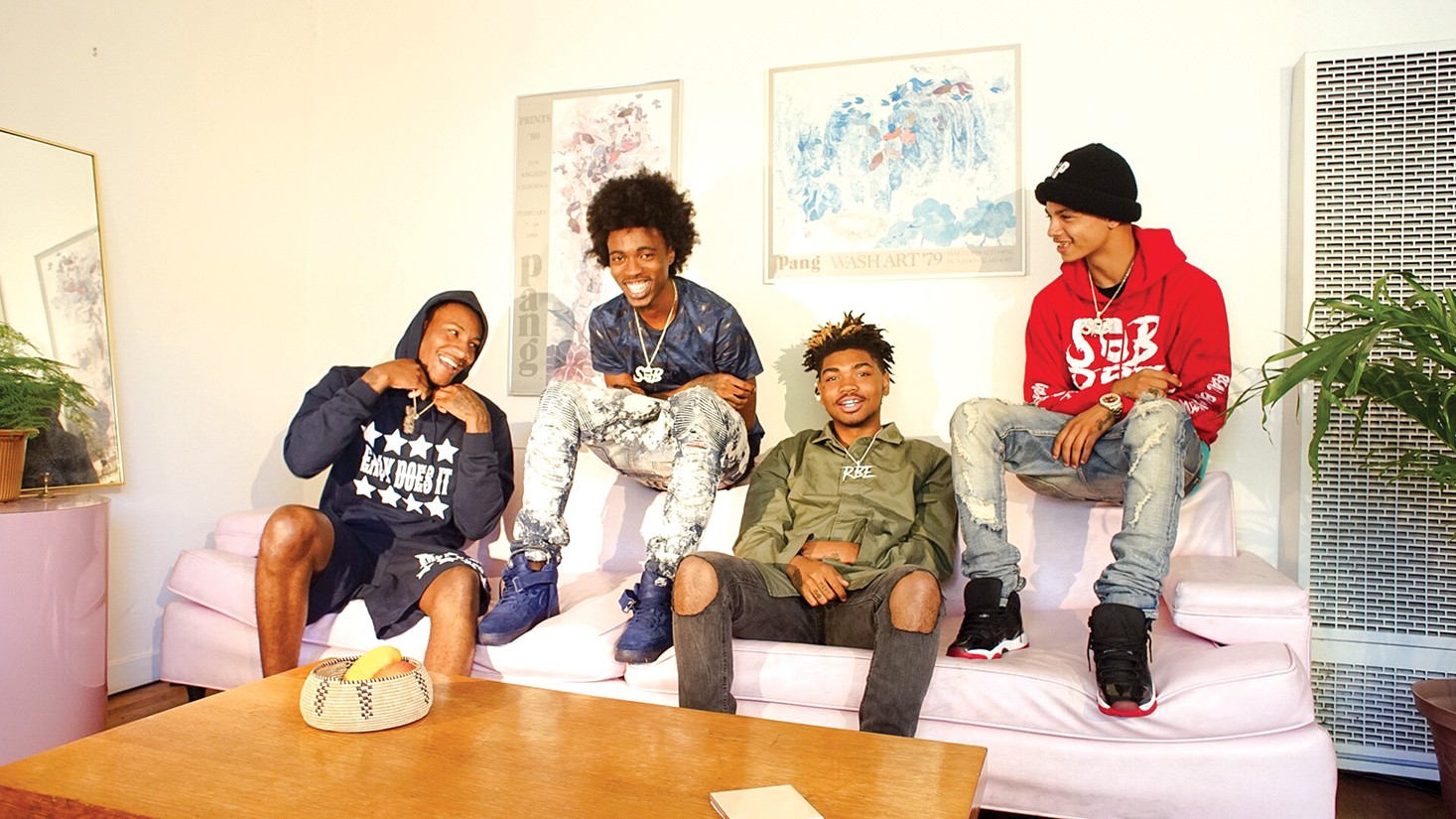
Kendrick’s collaboration with SOB x RBE presented their foursome to the world. “Paramedic!” brings the best aspects of West Coast rap to the forefront and shows its rough yet fun style. The ability to bring a style of rap and mix it with its originating African roots is impressive, and a task that Kendrick proved he could do. Speaking of African roots, in “Redemption,” Babes Wodumo is featured over a South African club beat called “gqom” – it’s the most upbeat song of the album and shows real authenticity.

“Seasons” is a mournful yet festive anthem that chronicles the struggles and inequalities of coming from Africa. It features California-rapper Reason (not to be confused with the South African raper that many excitedly hoped for) whose verse is reminiscent of a younger Kendrick with his story-telling style of rapping. But his verse, along with Mozzy and Sjava’s, helped to establish the common theme of the soundtrack. Within every song, whether it be chanted in the song’s hook or woven deeper in the verses, the album stands as a metaphor of the plights in the Black community that echo from the issues and sentiments from a past unknown, a past being represented with this movie.

And “Big Shots,” well, that’s just the proverbial taunting-celebratory-lap that Kendrick and Travis Scott take together. I mean, who other than Kendrick Lamar can use a refurbished hook and still make two hit songs from it? Another historical success on the books for Mr. Lamar. It’s got me amped and ready for the movie. And with some of the songs from the soundtrack being worked into the score of the film, we’ll get to see how some of the music translates directly into the movie.

Related image

Thursday, January 25, 2018

Mariah Carey: Queen of the Hip-Hop Collaboration

Named the United States’ most successful artists of the 1990’s by Billboard and the world’s best recording artist by the World Music Awards, Mariah “Mimi” Carey obtained fame early in her career that no one could’ve imagined. Her uncharted success came from her choice to break the mold while taking a risk on an up and coming genre of music; this decision helped shape music history.

Feeling restricted in her personal life and with her music, in late 90s Carey changed her image. Instead of sticking exclusively to the pop charts, Carey chose to venture into the world of hip-hop. She pulled together a new creative team and revamped herself into a sexier, more mature Mariah Carey. With the help of some of the 90’s biggest producers and hip-hop artists, Carey changed her style and her sound flawlessly.

Since making her transition in 1996 Carey has over 60 hip-hop collaborations under her belt; impressive for someone who started out exclusively as a pop artist. Her transition also helped solidify hip-hop/rap as a genre that could not only stand on its own merit but as a music that blended flawlessly with other genres. Hip-hop’s soaring popularity in the late 90s owes some credit to Mimi.

With two songs, Carey found the formula for a solid collaboration and solidified her position as the queen of the hip-hop collaboration.


HONEY

“Honey” was the first single from Carey’s sixth studio album Butterfly. It was also the re-defining song of Carey’s career. Honey was written and produced with the producer powerhouse of Puff Daddy, Q-Tip, and Stevie J. After the song was completed, Combs was very confident with the song, calling it "slammin'," but because of its heavy hip-hop influence, he felt only cautiously optimistic about the song's commercial success. Boy, he was wrong.

Music critics described her musical transition as “genuine” as they sang the praises of the song. "Honey" was successful in the United States, becoming Carey's third single to debut atop the U.S. Billboard Hot 100, a feat that has yet to be duplicated. The song stayed at number one for three weeks.

“Honey” is one of Carey’s most remixed song. The most notable was the “Bad Boy remix” and the “Classic mix.” The Bad Boy remix feature rapping verses from The Lox and Ma$e. Both versions sampled “The Body Rock” by The Treacherous Three.


Jermaine Dupri and Da Brat tried their hands at the song and created the So So Def remix. It features rap verses from both. Dupri used a new sample from The Jackson 5’s “It’s Great to be Here.”


David Morales created several dance remixes to the song as well – The Class mix, Def Club mix, Rascal Dub, and Boss Anthem mix. It’s ironic that the song that shaped her persona was insanely popular and laid the groundwork for more to come.


FANTASY

Carey and Puff Daddy teamed up to create “Fantasy,” both the original version and the remix. Although Columbia Records allowed creative liberty with Carey’s music, they became hesitant when she chose to feature Ol’ Dirty Bastard on the remix. They feared the sudden change was completely left field for her music and worried it would jeopardize the album's success.

Carey has stated that the “Bad Boy remix” contributed to over half of the sales of "Fantasy".


There is also a version omitting Ol' Dirty Bastard's verses – the “Bad Boy Fantasy remix.” “The Bad Boy remix” garnered positive reviews from music critics. Ken Tucker from Entertainment Weekly praised the song, claiming it’s one of the few tracks where Carey "defines herself."

The song and its remix arguably remain one of Carey's most important singles to date. Due to the success and influence of the song, Carey is credited with introducing R&B and hip-hop collaboration into the mainstream pop culture, and for popularizing rap as a featuring act.


The formula is tried and true and has been used by many R&B, hip-hop, and pop stars alike. “It became standard for R&B/hip-hop stars like Missy Elliott and BeyoncĂ©, to combine melodies with rapped verses. And young white pop stars—including Britney Spears, 'N Sync, and Christina Aguilera—have spent much of the past ten years making pop music that is unmistakably R&B,” explained Sasha Frere-Jones – editor of The New Yorker. “Her idea of pairing a female songbird with the leading male MCs of hip-hop changed R&B and, eventually, all of pop.”

Sunday, January 7, 2018

Late Registration: When the Sequel Becomes the Prototype

Kanye West's Grand Vision Began with His 2005 Live Album

Maximalism is an aesthetic of excess and redundancy. The philosophy can be summarized as "more is more." Kanye West, in his recent years, has been given the title of a maximalist when it comes to his music. The beats and the production of his albums and other works have evolved drastically from the soulful beats of College Dropout and The Blueprint. The Young Musicians Foundation has even arranged and orchestrated a symphony based off merging the works of Beethoven with West’s Yeezus and The Life of Pablo. The juxtaposition is jarring. Two musicians in different times who both “… wrought havoc on existing musical forms, alienated many, and forever changed the course of musical history.”

Not many know that West dabbled with the “more is more” philosophy long before My Beautiful Dark Twisted Fantasy and Yeezus. It’s evident from his sophomore release, Late Registration.

After seeing Eternal Sunshine of the Spotless Mind, an American film directed by Michel Gondry, West was captivated by the lushly orchestrated score of the movie and sought after its composer. Jon Brion, the film's composer, didn’t have a hip-hop background but he agreed to work with West anyway. 

The recording sessions between West and Brion were exploratory, using a broad spectrum of sounds. West brought his soulful samples, drum beat programming, and unfinished rap verses to the sessions and would construct his songs from there. He worked alongside Brion to choose a variety of unique instruments and attempted to incorporate their distinctive sound into the song's texture; Brion played each of them for West.


The album is largely orchestral in nature with a harmonious combination of string arrangements, piano chords, brass flecks, and horn riffs among other symphonic instrumentation. A myriad of foreign and vintage instruments were also used, such as a celesta, harpsichord, Chamberlin, CS-80 analog synthesizer, Chinese bells and berimbau, vibraphones, and marimba.

The production carried West in an unforeseen new direction, a raised tempo and a driving, pulsating bassline colliding with tasteful live baroque instrumentation to present an extravagant vision of the Kanye sound. On songs like “Celebration,” Brion conducted a 20-piece orchestra. “Bring Me Down” holds more orchestration than any other than any other track on the album.

But Brion makes his mark on tracks like "Gone.” It contains some of the most elaborate orchestral arrangement of the entire album. The composition begins with a vocal sample of "It's Too Late" by Otis Redding and a two-chord piano ostinato, followed by a simplistic funk beat. As the song progresses, its structure gradually morphs and develops more and more musicality.

The composition assumes ten violins, four violas, and four cellos amid the verses. all of which initially come in brief staccato bursts that simply punctuate the rhythm but eventually expand and consolidate into a fully formed string section by the arrival of the harmonic choruses.

Image result for late registrationLate Registration is the foundation for latter-day maximalist Kanye works like Cruel Summer and My Beautiful Dark Twisted Fantasy in its kitchen sink sonics but also its tone. The album dives fearlessly into the dark of the black American experience.

On Yeezus, West screams of the monopoly of wealth that the rich and powerful have and how they use it to ensure the powerlessness of others, making the poor and the weak like the new slaves. It wasn’t received as easily as when he spoke of communities beset by crime-gripping restless youth with a lack of opportunities on “Heard Em Say”. Or when he told the story of his family coming together to his grandma’s hospital bedside due to income-based lack of access to proper medical care in “Roses”.

“Crack Music” is Late Registration’s purest collision of Kanye’s black radical consciousness and Jon Brion’s orchestral flair. Kanye rhythmically walks through the collapse of the civil rights movement, the rise of the crack epidemic, and hip-hop’s role as a coping mechanism and gainful employment amid it all.

Rob Sheffield of Rolling Stone deemed the record "an undeniable triumph, packed front to back, so expansive it makes the debut sound like a rough draft”; that’s exactly how it Late Registration stands against the rest of Kanye West’s works – if not the very best, it remains the prototype.